
An O'Ring
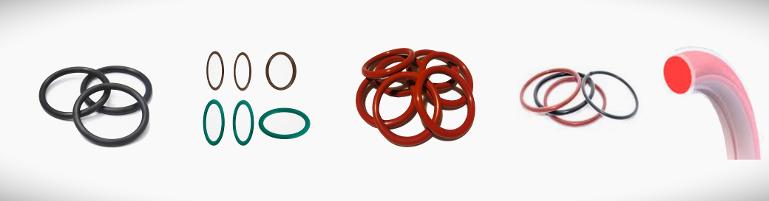
An O-Ring, also known as a packing or a toric joint is a mechanical gasket in the shape of a torus, it is a loop of elastomer with a round cross section, designed to be seated in a groove and compressed during assembly between two or more parts, creating a seal at the interface.
The O-Ring may be used in static applications or in dynamic applications where there is relative motion between the parts and the O-Ring.
Dynamic examples include rotating pumps shafts and hydraulic cylinder pistons. Static applications of O-Rings may include fluid or gas sealing applications in which:
1. the O-Ring is compressed resulting in zero clearance
2. the O-Ring material is vulcanized solid such that it is impermeable to the fluid or gas
3. the O-Ring material is resistant to degradation by the fluid or gas
O-Rings are one of the most common seals used in machine design because they are inexpensive, easy to make, reliable and have simple mounting requirements. They have been tested to seal up to 5000 psi of pressure. The maximum recommended pressure of an O-ring seal depends on the seal hardness and gland clearance
Type of O'Ring Materials
The most popular types of O'Ring materials:
1. NBR Rubber (also known as Nitrile or Buna) a common material for o-rings because of its good mechanical properties.
Standard grades of NBR are typically resistant to mineral oil-based lubricants and greases, many grades of hydraulic fluids, aliphatic hydrocarbons, silicone oils and greases and water to about 80 °C. NBR is generally not resistant to aromatic and chlorinated hydrocarbons, fuels with a high aromatic content, polar solvents, glycol-based brake fluids and non-flammable hydraulic fluids (HFD). Temperature for standard compounds ranging from -40 deg C to 100deg C.
2. EPDM Rubber (ethylene propylene diene monomer rubber) commonly used in water systems, steam and applications using brake fluids and ethanol, temp ranging from -55 deg C to +120 deg C, not recommended for mineral based oils and fuels.
3. FKM/FPM/Viton (Fluorocarbon Rubber) commonly used in applications that needs resistance to high temperatures and chemical attacks. Excellent resistance to fuels, oils and acids. Service temp for standard compound (Type A) ranging from -25 deg C to +210 deg C, not recommended for ketones, amines or nitro hydrocarbons.
4. Silicone (VMQ) Rubber possess excellent resistance to temperatures ranging between -50 deg C to +230 deg C and hot air, engine and transmission oils, animal and vegetable fats, ozone and some brake fluids. Commonly used in food industry as they are usually made out of non-toxic ingredients. Silicone compounds have poor tensile strength, tear and abrasion resistance so are not recommended for dynamic applications.
5. Virgin PTFE (Teflon) - this solid type material has an excellent resistance to high temperatures, chemicals and solvents, non-stick characteristic and low friction surface, approved for use in food and pharma industries ("FDA Approvals").
6. FEP Encapsulated - Silicone, Viton or EPDM Core, this type of o'ring material comprise of an elastomer core which has been seamlessly encapsulated in a jacket of PTFE (Teflon) fluoropolymer. They are recommended when a standard O-ring has inadequate chemical resistance for an application. They are also recommended when a solid PTFE O-ring does not have the elasticity for reliable, long term fluid sealing, often used where chemical resistance and or hygiene is required.
7. FFKM/FFPM are Perfluoroelastomeric compounds containing an even higher amount of fluorine than FKM. Excellent resistance to high temperatures and chemicals similar to Teflon but with flexibility of FKM rubber. One of the most popular brands are: Kalrez, Evolast, Chemraz or Perlast.
© Copyright sealsdirect.ie